


Page 107, Line 1 “Reduction in Minimum Spending”
CMAQ Set-Aside Structure
Funding Levels
Page 113
Extends state authority to allow low-emission and energy-efficient vehicles to use HOV lanes through 2031.
Page 174
Structure
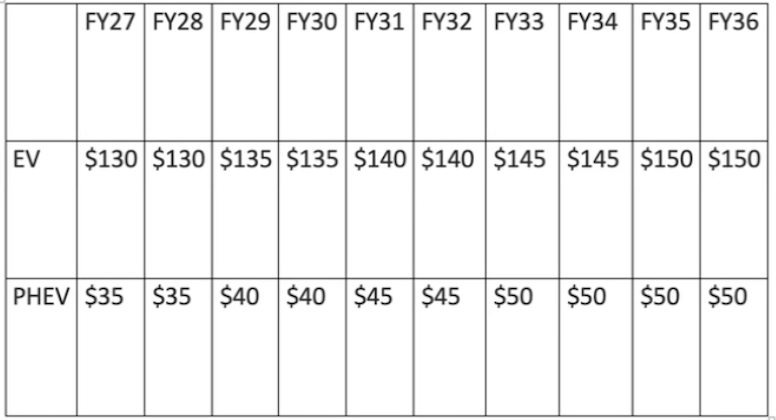
Rationale and Negotiations
Revenue and Scoring
Administration and Enforcement
Political Dynamics
Strategic Considerations Raised by Staff
Page 224
This section amends vehicle weight limitations on the interstate system. It makes technical changes to only permit an emergency vehicle or covered heavy-duty tow or recovery vehicle to operate in excess of the weight limitation under a state permit. It provides parity for the weight of hydrogen vehicles with existing exemptions for gas and electric battery vehicles and allows for a 10 percent shift in weight variance along the axles of commercial motor vehicles carrying dry bulk goods
Page 651
This section defines terms related to autonomous commercial motor vehicles in section 31132 of Title 49, United States Code.
Page 654
This section creates a safety standard for commercial motor vehicles equipped with autonomous driving systems (ADS) operating in interstate commerce. The safety standard requires manufacturers of ADS and ADS-equipped commercial motor vehicles to meet all applicable regulations, demonstrate competencies through a safety case, and adhere to reporting requirements. The section also establishes requirements for operators of ADS-equipped commercial motor vehicles.
Additionally, this section establishes a transportation rulemaking committee to make recommendations on the implementation of the safety standard established under this section, and on the applicability of parts 350 through 399 of title 49, Code of Federal Regulations, for ADS-equipped commercial motor vehicles, dynamic driving task (DDT) fallback-ready users, remote drivers, remote assistants, and driverless dispatch operators.
Page 678
This section amends section 31141(a) of title 49, United States Code, to ensure ADS-equipped commercial motor vehicles are included under the Secretary’s preemption of state law authorities.
Page 678
This section provides parity for automated driving systems technologies and equipment with other safety technologies for vehicle width exemptions.
Page 679
Page 680
Page 680
Page 980
Amends §5107. “Hazmat employee training requirements and grants” to include “Hazmat employee Hazardous Materials Safety Training requirements and grants” and directs grants for a number of eligible uses, including:
(F) for training or response gear needed for volunteer or career fire departments, or a combination of such fire departments, to address thermal runaway, including—
(i) equipment, including blankets to suppress thermal runaway, portable fire suppression agents, and other equipment the Secretary determines appropriate, to support the suppression of thermal runaway resulting from the transportation of lithium-ion cells or batteries.
(ii) field-deployed residual-energy assessment and cell-integrity diagnostics;
(iii) devices to monitor environmental conditions and runoff control to assist with cleanup after a thermal runaway event; and
(iv) access and containment tools, over-pack systems, and packaging for damaged, defective, or recalled lithium-ion batteries or cells.’’;
Appropriations — Grants cannot exceed $1,500,000 annually.
Page 1001
Requires lithium-ion cells or batteries (as defined in UN 3480) to be offered for commercial transport at a state of charge not exceeding 30 percent of the rated capacity of such cells or batteries (determined through the guidance and methodology under section 38.3.2.3 of the Manual of Tests and Criteria of the United Nations
Authorizes the transportation of lithium-ion cells or batteries at a state of charge greater than 30 percent of the rated capacity of such cells or batteries only under conditions approved by the Associate Administrator for Hazardous Materials of the Pipeline and Hazardous Materials Safety Administration in accordance with the requirements in subpart H of part 107 of title 49, Code of Regulations.
Page 1002
Updates 49 USC 5118: Hazardous material technical assessment, research and development, and analysis program by adding “‘(H) thermal runaway of lithium-ion cells or batteries in commercial transport units, including—
(i) the effectiveness of innovative technologies and methods to suppress such thermal runaway of lithium-ion cells or batteries in commercial transport units transported under UN 3536, including technologies and methods that do not use materials listed in table 302.4 of section 302.4 of title 40, Code of Federal Regulations, and identified by chemical abstracts service registry numbers 1763–23–1 and
(ii) the impact of the state of charge of a battery or cell on methods to suppress such thermal runaway; and
(iii) methods for emergency responders to verify the state of charge of a battery or cell experiencing thermal runaway as a result of a fire or crash during commercial transport.’’
Report: Not later than 120 days after the receipt of all reports for which an agreement was entered into under subsection (b), the Secretary shall review the findings submitted by entities described in subsection (b) and submit to the Committee on Transportation and Infrastructure of the House of Representatives and the Committee on Commerce, Science, and Transportation of the Senate a report containing—
(1) the findings detailed in each report, including which fire suppression tools and techniques were found to be most effective at suppressing thermal runaway resulting from a lithium-ion cell or battery fire;
(2) the impact of the state of charge of a battery on the techniques and tools studied under the agreement;
(3) information on the best methods to verify the state of charge of a lithium-ion battery or cell after a nonconsumptive event and how that information can inform decisions about how to safely mitigate thermal runaway; and
(4) recommendations on whether, based on such review, updated guidance or training of the Pipeline and Hazardous Materials Safety Administration is necessary
Appropriations.—Of the amounts made available under section 5128(a) of title 49 United States Code, the Secretary shall withhold $2,000,000 for each of fiscal years 2027 through 2031 to enter into an agreement to carry out section 5118(c)(3)(H) of title 49, United States Code.
